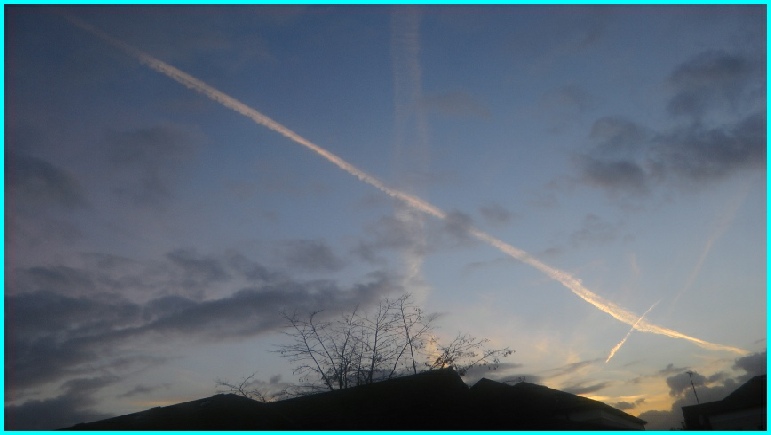
To open this discussion, it is fair to say that the vast majority of us will only ever experience this phenomena from below, provided we are close enough to a flight path. To witness this effect in the air, or while aboard any flying machine would still be quite rare, even for trained pilots, however this word would almost certainly be part of their vocabulary.
The essence of this word comes from the unified words ; condense ( -ation ) and trail. As a noun, as you would expect, it is the trail of condensed vapour visibly left behind a high flying aircraft. It came into wide use in the 1940’s and is thought to have originally been used by North American communities, particularly in the aviation industry.
Moreover, it is interesting to note the similarity in two other words which can also be joined to form the same word. They are ‘contra’ meaning against, and ail, meaning to feel pain or to be ill, thus in this case the combined meaning can also be 'opposed to pain', or 'against illness'. Somehow this alternative explanation demonstrates a credence that we can all share which relates to the symbols we use to illustrate our thoughts precisely. So, to ameliorate any negative mental attitude to these normal effects of water vapour in the sky, we suggest that the reader takes on board the specific implications that this word may convey.